

Why we?
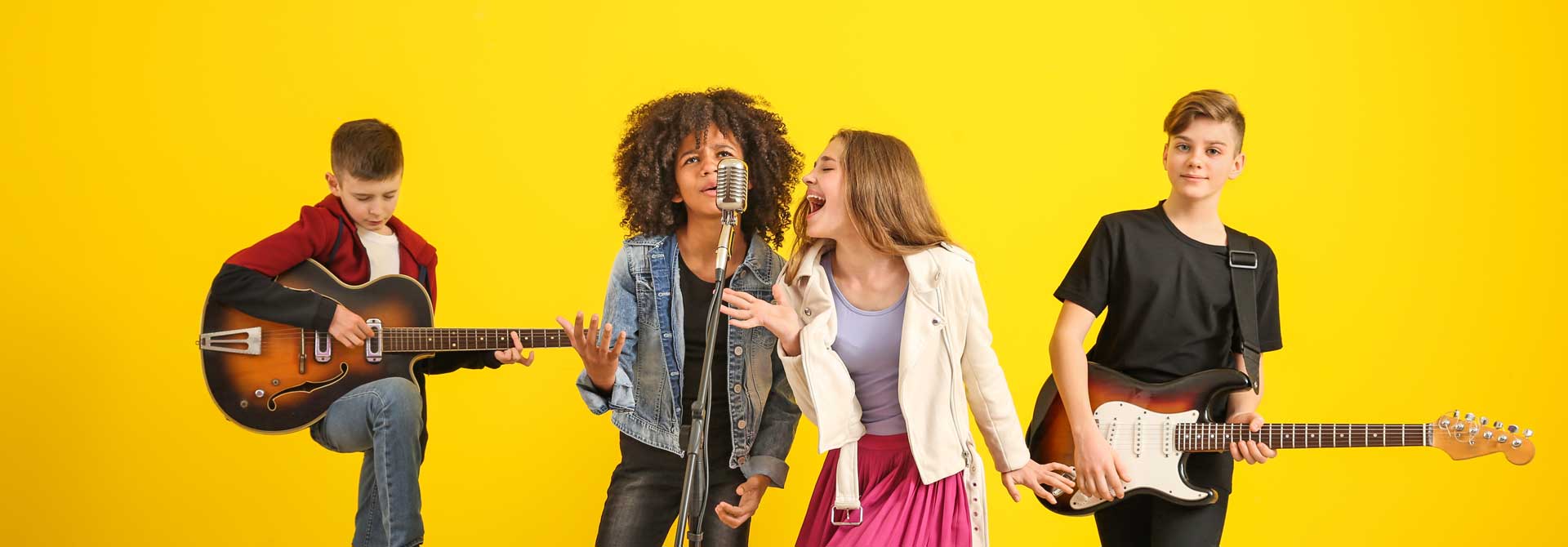
We take on musical (singing, music and dance with elements of acting) and learning English in the form of unique classes for children. We focus on creative, inspiring and teamwork in a friendly atmosphere based on a flexible repertoire.
Our classes have a positive impact on learning to work in a group, teach respect for others and help children overcome barriers, familiarizing them with public speaking.
We combine discovering the "language of musical" with learning foreign languages, and our 2-in-1 is based on mechanisms of harmonious and multidirectional development of children, tested in theory and tested in practice.
A musical is about emotions, and emotions shape a person's personality from an early age.
Joint creation and experience of music, dance and theatre has a general developmental impact on children, allowing for a comfortable start at school, including proper interaction with a peer group.
Musical gives children the foundations for development in cognitive, sensory and social dimensions. Musical is like a new language that children learn without any preliminary preparation, because they themselves give it content and meaning. Combining theory with practice, over the course of five years we have developed an original method that combines musical classes with English language teaching for children of preschool and early school age.
Studies have shown that young children learn foreign languages the fastest when creative play, cooperation in groups and a safe and friendly environment go hand in hand with elements of artistic expression such as musical techniques adapted to age, predispositions and needs.
Just listening to music has a positive effect on creativity and IQ development in children. Active participation in creating various forms of music and dance has a multi-directional effect on the brain, activating all of its parts and accelerating the development of cognitive functions, including memory. By creating and deepening interests related to music, singing and dancing, we also work on motivation to learn. Motivation improves concentration, and better concentration allows for faster and more lasting learning. Audio-visual methods and "gamification" (learning through play) make the effects of musical education and learning foreign languages connect seamlessly with each other and mutually drive each other.
Cognitive development
Social and emotional development
By discovering their own potential and developing musical interests, children learn to manage their own emotions and build relationships. They gain self-confidence, self-discipline, the ability to make decisions in a peer group and other character traits that they will need in later life. Through melody, rhythm, harmony, tones, tempos and intensities, we provoke children to move and teach them to discover and name their emotions, react to emotions and control their own behavior. The applications of music, singing and choreography to model individual dimensions of consciousness among children are not yet fully explored.
A wide selection of musical styles and types of dance stimulates curiosity about what is different and unknown. It teaches to better understand and appreciate the pluralism of cultures, traditions and perspectives. It also makes children gradually develop the ability of empathy and build a desire to cooperate with others. Appropriately selected topics of musical and language classes help children - especially those slightly older - to notice basic social values. For example, respect for diversity and awareness related to the protection of the natural environment.